
The Power of ‘Precision’ in Modern Manufacturing Today
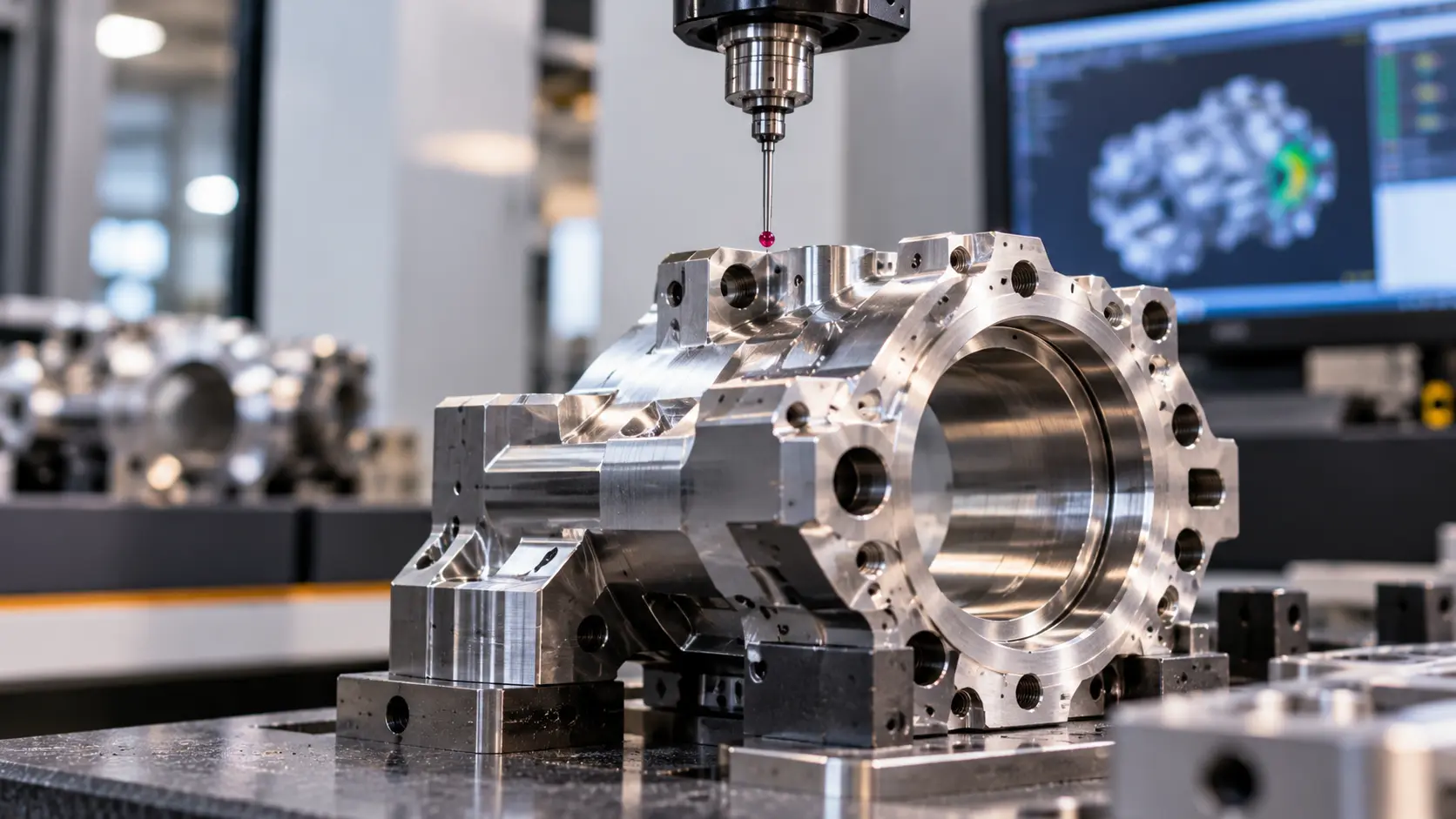
In manufacturing, precision has always mattered. What has changed is just how much now depends on it.
Today’s manufacturers are producing increasingly complex components, working with demanding materials, integrating digital technology into production, and serving industries where even small inconsistencies create much bigger problems downstream.
That makes precision more than a machining specification. Precision is becoming a business advantage.
For manufacturing leaders, the real power of precision isn’t simply producing a part within tolerance. It’s building a production environment where quality, measurement, equipment, data, people, and processes work together consistently.
Precision Starts With Measurement
You can’t control what you can’t reliably measure. Metrology is the science of measurement and its application.
Its dimensional measurement programs support manufacturing through highly accurate measurements, calibration, standards, and traceability. This sounds technical, but the business consequences are clear.
Picture having produced hundreds of components that seem to be correct, only to find out during the final inspection, or even worse, when the customer is putting them together, that a key dimension has gradually moved outside the specified range. The cost is no longer limited to one bad part.
Now you could be looking at rework, scrap, machine downtime, delayed shipments, additional inspection, or customer dissatisfaction. Strong measurement systems help manufacturers identify variation earlier, when there are still opportunities to correct it.
Precision Is Really About Repeatability
Producing one excellent part is an accomplishment. Producing the 10th, 100th, and 1,000th parts to the same standard is 21st-century manufacturing.
Modern precision therefore depends heavily on repeatability. Machines have to perform consistently.
Tooling has to remain controlled. Inspection equipment must provide reliable measurements.
Processes need to be documented and understood. Metrological traceability is the connection of a measurement result to a recognized reference through a documented, unbroken chain of calibrations, with each step contributing to the measurement uncertainty.
The point for leadership teams is that being precise demands confidence; you have to be confident that a measurement means exactly what you believe it to mean and that the process will yield the same acceptable result again tomorrow.
Better Precision Means Less Waste
Precision is sometimes viewed primarily as a quality requirement. It’s also an efficiency strategy.
A more controlled process reduces the amount of material, machine time, labor, and inspection effort spent correcting avoidable problems. That matters because manufacturing competitiveness increasingly depends on improving both material and energy productivity.
Advanced manufacturing technologies aim to improve energy efficiency, material productivity, and the competitiveness of American manufacturers. Think about precision from that perspective.
Every scrapped component represents more than material in a bin. It represents the consumption of machine hours, tooling, electricity, labor, scheduling capacity, and potentially another production run. Getting the process right more consistently protects all of those resources.
Data Is Expanding What Precision Means
Precision manufacturing is also becoming increasingly connected. Machine information, inspection results, production records, digital models, and operational data give manufacturers much greater visibility into what is happening throughout the production process.
By using integrated information and intelligent software, smart manufacturing systems can increase productivity, quality, agility, and sustainability. Operational data enables manufacturers to identify performance problems and enhance their system design.
That changes the precision conversation. Instead of only asking “Did this part pass inspection?” manufacturers increasingly ask “What is the process telling us before the part fails inspection?” That is a much more powerful question.
Precision Matters Even More When the Part Matters More
The consequences of variation aren’t equal across every industry. In aerospace, defense, space, medical, energy, and other demanding applications, components may operate under extreme loads, temperatures, pressures, vibration, or environmental conditions.
Quality guidance on additive manufacturing, for example, emphasizes the importance of process control, qualification, certification, testing, and standards for components intended for critical aerospace applications. In environments like these, precision isn’t about chasing impressive numbers simply because equipment can achieve them.
It’s about producing what the design requires and demonstrating that it was produced correctly.
Precision Is a Culture, Not Just a Capability
The most advanced CNC machine, laser, inspection system, or automation platform can’t create a precision operation by itself. People still make decisions.
They interpret drawings, set up equipment, monitor processes, inspect components, maintain machines, review data, identify problems, and decide whether something that looks unusual needs further investigation. Technology makes precision possible at levels that previous generations of manufacturers could hardly have imagined.
But people and processes make precision sustainable. That’s why manufacturing leadership should view precision as something bigger than a tolerance on a drawing.
It’s the discipline of reducing uncertainty throughout the production process. When measurement is trustworthy, processes are repeatable, equipment is capable, data is useful, and teams understand what quality requires, manufacturers gain incredibly valuable confidence in what leaves the shop floor.
And in modern manufacturing, that confidence may be one of the most powerful capabilities a company can build. If you have any questions, you can call 972-501-9990 or email sales@maximumind.com.
Share this :