
How Technology Is Changing the Workforce’s Manufacturing Skills Gap
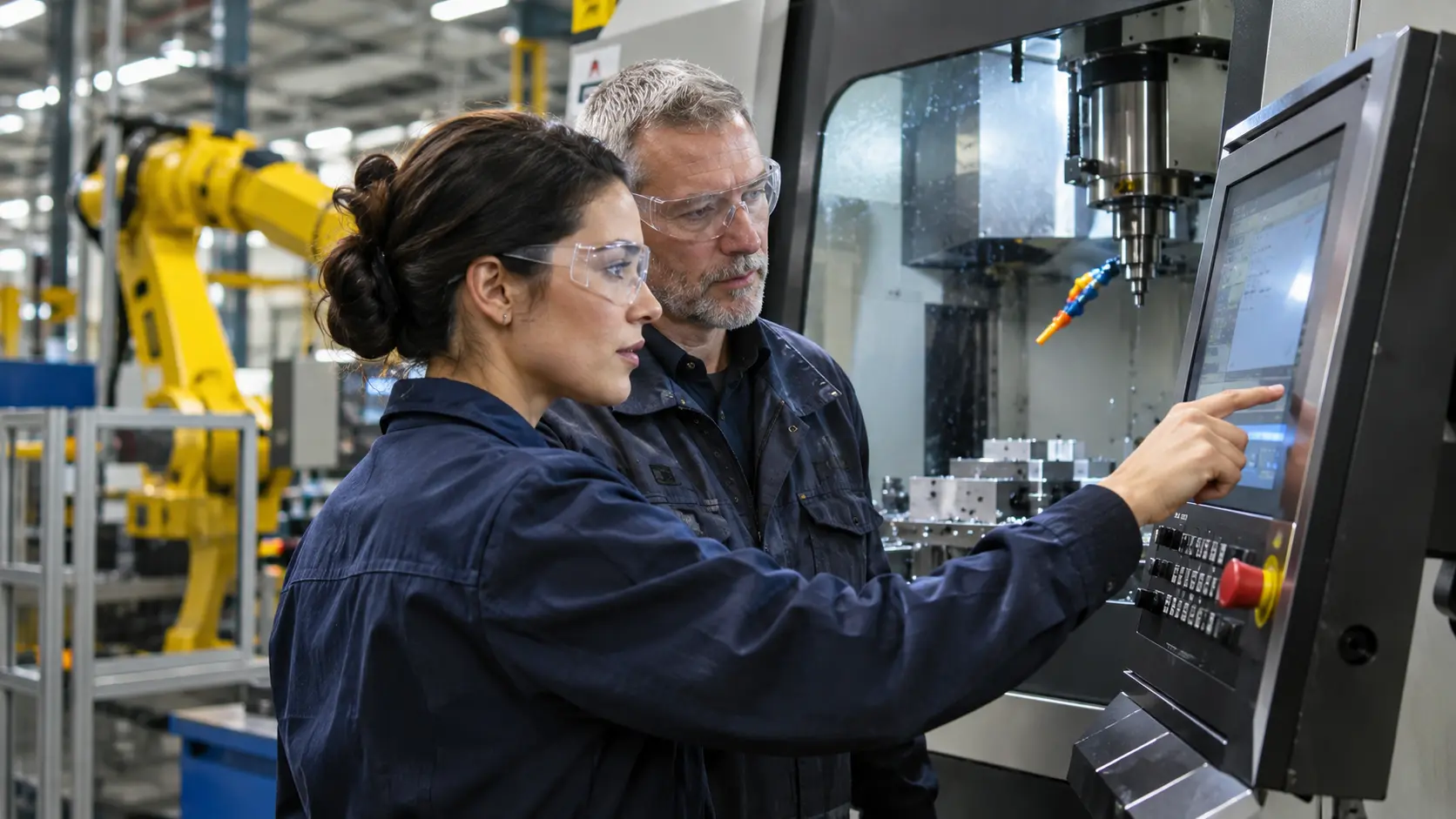
Manufacturing has always been about making things better, faster, and more efficiently. But today, one of the industry’s biggest challenges is finding people with the right skills to keep everything moving.
As automation, robotics, and digital technologies become more common, the skills manufacturers need are changing just as quickly. And for many companies, the challenge is a shortage of workers and a widening gap between employees’ skills and those modern manufacturing demands.
The good news is that technology is contributing to helping manufacturers solve the challenge it created.
The Manufacturing Skills Gap Is About More Than Hiring
For years, manufacturers have struggled to recruit experienced machinists, technicians, equipment operators, and other skilled professionals. Retirements, changing career interests, and evolving technical requirements have made an already competitive labor market even more complicated.
There will be nearly a million production job openings each year between 2024 and 2034 (primarily due to retirements and workers moving into other roles). The current manufacturing workforce will need to be proficient in traditional production methods as well as at home with digital systems, automated equipment, and increasingly connected operations.
That combination of hands-on experience and technological knowledge is one of the growing challenges in manufacturing.
Automation Is Changing Jobs, Not Just Replacing Them
The common assumption is that more automation automatically means fewer manufacturing jobs. The reality is more complicated.
Automated equipment can handle repetitive work, provide greater consistency in production, and reduce some of the physical demands on the workforce. The equipment itself still requires skilled staff to program it, monitor it, address any problems that arise, and perform maintenance.
A precision manufacturing facility introducing automated machining equipment will need its operators to spend less time on repetitive manual adjustments and more time monitoring the equipment, checking quality, and looking for opportunities to improve production. The nature of the work will be different, but human skill will still be required.
Employment of industrial machinery mechanics, machinery maintenance workers, and millwrights is set to grow by 14% from 2025 to 2035 (partly due to the need for ongoing maintenance and repair of automated manufacturing equipment). That raises the question of whether your investment in automation is also an investment in the people who will make it work.
Digital Skills Are Becoming Everyday Manufacturing Skills
Not every manufacturing operative needs to be a programmer or a data scientist. Still, an understanding of how to work with digital technology is increasingly part of the day-to-day running of manufacturing. Production teams will use digital work instructions, digital inspection systems, equipment-monitoring dashboards, and software to track production schedules and quality performance.
These tools enable staff to make better decisions by using real-time information rather than relying on purely manual processes. Digital literacy, automation awareness, technical problem-solving, and traditional mechanical skills are all important capabilities for the modern manufacturing workforce.
Digital transformation works best when employees understand both the technology and the manufacturing processes behind it.
Training Existing Employees Is Becoming a Competitive Advantage
Finding qualified workers matters, but developing the people already on your team is just as valuable. Experienced manufacturing employees understand equipment behavior, production challenges, material characteristics, and the small details that influence quality.
Those insights aren’t easily replaced. When companies combine that experience with new technical training, they create opportunities to improve productivity without losing valuable institutional knowledge.
Workforce development is key, and the right approach involves structured onboarding, technical training, leadership development, and ongoing employee engagement. Practical ways to achieve this include cross-training machine operators, getting maintenance staff up to speed on the automated systems, introducing digital quality tools, and creating opportunities for experienced staff to mentor newer staff.
These investments can enhance workforce flexibility and reduce reliance on a narrow pool of external candidates.
Technology Also Makes Manufacturing Careers More Attractive
Today’s manufacturing environment is increasingly characterized by robotics, sophisticated machinery, digital design, advanced inspection, and opportunities to develop a wide range of specialist technical skills. For the younger generation looking at career options, that’s a very good thing to point to, showing that manufacturing is, in fact, a lot more than just a production environment.
But technology alone won’t be enough to attract the next generation. You also need clear career paths, opportunities for progression, and training that demonstrates how people’s skills can develop.
NIST’s Manufacturing Extension Partnership supports workforce initiatives that connect manufacturers with education, training, and workforce development resources.
The Future Belongs to Manufacturers Who Invest in Both
The skills gap in manufacturing won’t just vanish because you’ve got more sophisticated equipment. In fact, technology without the appropriate skills can create its own set of problems, including production stoppages, equipment underutilization, and inconsistent performance.
The manufacturers best placed for long-term success will understand that tech and workforce development aren’t two separate things to be done. They are intertwined investments.
You have to look at the workforce requirements as you look at the equipment you’re buying. Training has to be built into the operational plan, and you have to create an environment where people can keep developing their skills.
The future of manufacturing is about making both people and technology stronger. The companies that establish that connection will be in a much better position to compete, adapt, and grow in a more sophisticated manufacturing environment.
If you have any questions, you can call 972-501-9990 or email sales@maximumind.com.
Share this :